- +44 7391 388154
- admin@oxsummerschools.co.uk

Learning from the landscape
The landscapes around us are the product of thousands of years of interaction between natural processes and human activity. A modern landscape can contain evidence of geological change, prehistoric settlement, agriculture, industrialisation, urban development and contemporary environmental management, often within a remarkably small area.
This course explores how landscapes develop, how people have used and altered them, and what their history can tell us about the environmental challenges of the future.
Britain provides an exceptional case study. Its varied geology, long history of human occupation and dramatic contrasts over relatively short distances allow students to examine environmental and social change from the end of the last Ice Age approximately 11,700 years ago through to the challenges of the 21st century.
Students consider geological and environmental processes alongside archaeological and historical evidence, changing patterns of settlement and land use, industrialisation, post-industrial economic change and contemporary approaches to climate adaptation.
The course ultimately asks students to look both backwards and forwards: how did today’s landscapes develop, how have societies responded to environmental and economic change, and what can these experiences tell us about managing the landscapes of the future?
Britain forms the principal case study, while the course also places these questions within a wider global context.
No previous experience of Geography, Archaeology or Environmental Studies is required. The course is designed for undergraduate students from a wide range of academic backgrounds.
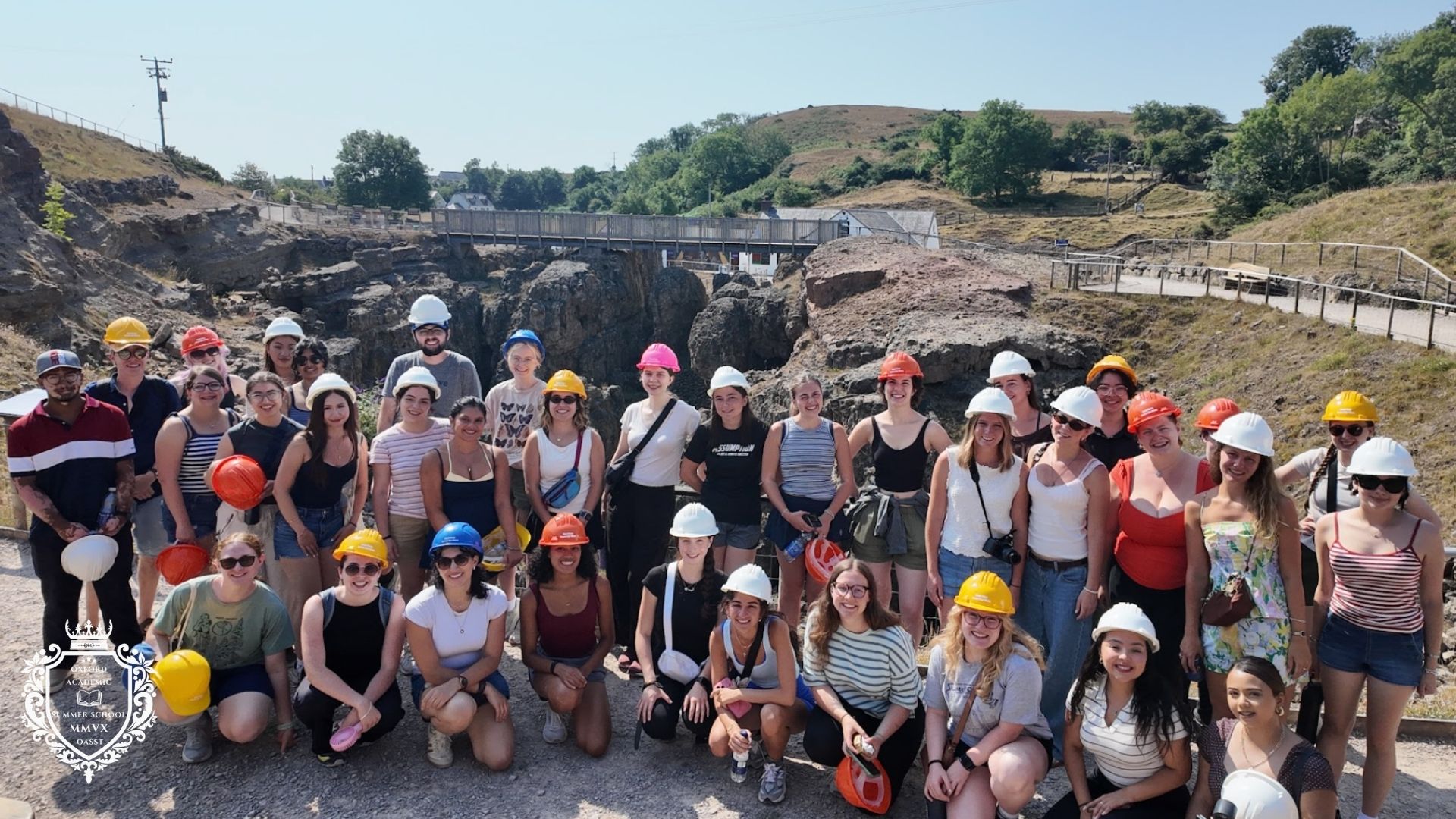
Field study forms an important part of the course. Students encounter landscapes and sites shaped by different combinations of natural processes, human settlement, heritage management, conservation, industrial development and modern infrastructure. These visits introduce themes that are subsequently developed through lectures, seminars, tutorials and independent research.
Students are encouraged to learn how to read the landscape: to identify evidence, ask why particular features are present and consider what the physical environment reveals about the societies that have occupied and managed it. The course incorporates the Summer School’s residential field excursion through South-West England and Wales, providing opportunities to examine contrasting landscapes directly and to connect field observations with academic study.
The course begins by examining the processes that created the physical landscape students see today. Students explore geological and environmental processes associated with the end of the last Ice Age and consider how landforms, climate and environmental change created the settings within which subsequent human societies developed.
Field observations introduce techniques for identifying landscape features and interpreting evidence within the physical environment. Students begin to consider a central theme of the course: a landscape is not simply scenery, but a record of processes and events extending across thousands of years.
Human occupation introduced new layers of change. Students use archaeological and historical evidence to examine changes in British landscapes since approximately 11,700 BP, considering how settlement, agriculture, population and changing patterns of resource use transformed the environment.
Archaeological evidence provides an important means of reconstructing landscapes where written evidence is absent, while later historical sources allow students to consider changing relationships between communities, land and natural resources. Students develop the ability to combine evidence from different disciplines in order to interpret how landscapes evolved.
Industrialisation transformed the scale and speed at which societies could alter their environments. This part of the course examines the development of modern landscapes through industry, infrastructure, urbanisation and changing patterns of resource use.
Students consider the environmental and economic consequences of industrial development and explore the connections between landscapes, economic systems and technological change. British examples are considered alongside wider international developments.
The 20th century brought extraordinary changes in population, land use, industry, infrastructure and economic organisation. Students compare patterns of change in the Northern and Southern Hemispheres and consider the effects of mass industrialisation, conflict and subsequent economic restructuring.
Particular attention is given to the ways in which post-industrial economies respond to change in both rural and urban environments. Students examine how landscapes once shaped by particular industries can acquire new economic, environmental, cultural or heritage functions as societies change around them.
The final stage of the course turns towards the future. Students examine current climate trends and projections, environmental policy and the challenges involved in managing landscapes under changing climatic conditions.
The course considers the drivers of predicted global climate change during the 21st century and explores possible responses, including adaptation and approaches to environmental management and geoengineering. Students bring together evidence encountered throughout the programme to consider how knowledge of past environmental and human change can inform decisions about the future. The final question is deliberately forward-looking: what comes next, and how should societies respond?
Teaching combines lectures, seminars, individual tutorials, field study and independent research. Weekly lectures introduce the principal academic themes and are followed by group discussion. Student-led seminars provide opportunities to research and present particular topics and to explore different interpretations through peer discussion.
Individual tutorials allow students to discuss their academic work directly with the tutor. Early tutorial work also helps establish each student’s previous experience, interests and learning goals, allowing teaching to respond to the academic backgrounds represented within the group. This combination of field observation, independent research and small-group discussion encourages students to draw connections between Geography, Archaeology, History, Economics and Environmental Studies rather than approaching landscape change through a single discipline.
Students demonstrate their learning through a combination of research essays, individual tutorials and student-led seminar presentations. Indicative written assignments include:
Reading the Landscape
An investigation of geological and environmental landform processes and techniques for identifying them.
Building the Modern World
A research essay requiring students to synthesise evidence from related sources.
The Long 20th Century
An examination of mass industrialisation, conflict and their consequences for the modern world.
Adapting to a New Environment
A final research assignment examining contemporary climate trends, projections and environmental policy while drawing together themes encountered throughout the course.
Students also prepare seminar presentations arising from field study and taught topics, culminating in a final individual presentation.
Assessment therefore develops the student’s ability to research, interpret evidence, construct an argument, communicate ideas and connect observations in the field with wider academic questions.
By the end of the course, students should be able to:
Some reading before attending the programme is strongly recommended.
M. Bell & M.J.C. Walker, Late Quaternary Environmental Change: Physical & Human Perspectives, 2nd edition, Pearson, 2005.
W. Behringer, The Cultural History of Climate, Polity Press, 2010.
Barry Cunliffe, Britain Begins, Oxford University Press, 2013.
Timothy Darvill, Prehistoric Britain, 2nd edition, Routledge, 2010.
R. Hetherington & R.G.B. Reid, The Climate Connection: Climate Change and Modern Human Evolution, Cambridge University Press, 2010.
Francis Pryor, The Making of the British Landscape: How We Have Transformed the Land, from Prehistory to Today, Penguin Books, 2010.
The reading reflects the interdisciplinary character of the course, combining environmental change, archaeology, climate history and the development of the British landscape.
© OASST Ltd for 2026, hosted at Magdalen College & St Edmund Hall College, Oxford
We offer great services to our clients


Medieval Studies/English Literature


